

An ER vet’s guide to organ, gut, joint, and behavioral changes that show up long before any symptom you can spot at home.
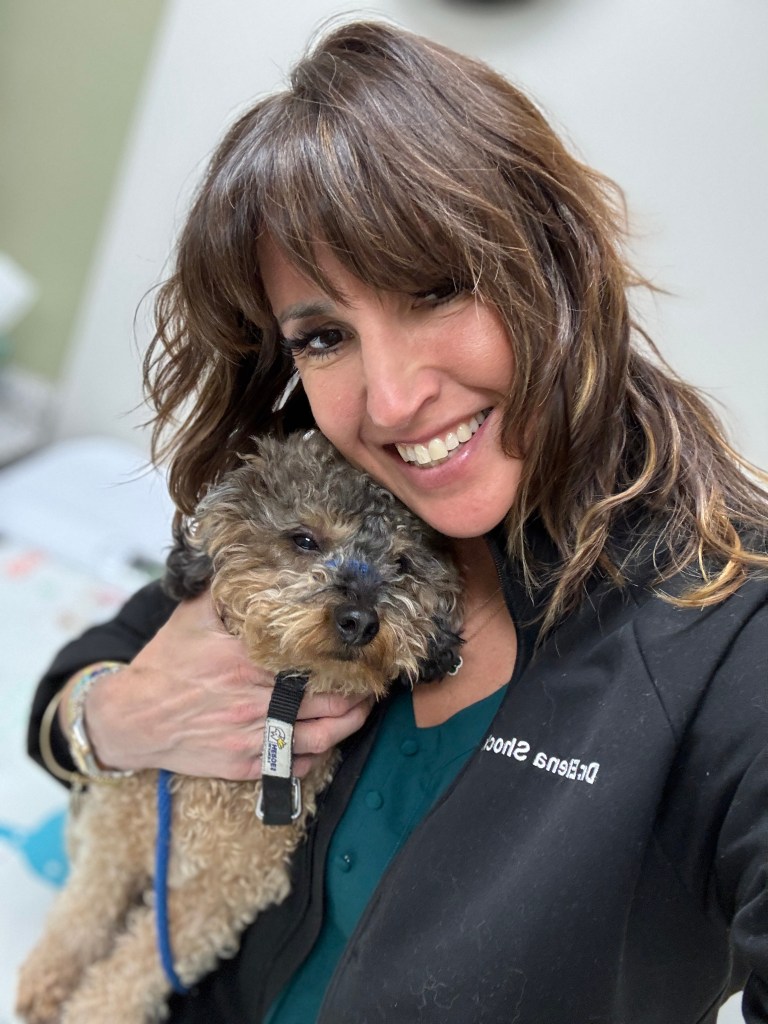
By Dr. Elena Shockman, VMD
What’s Happening Inside Your Dog That You Can’t See
The dogs who worry me most in the ER are not the ones in obvious crisis. They are the ones whose owners say the same thing right before the diagnosis lands. “She was fine. She just stopped eating this morning.” “He was acting completely normal yesterday.”
Sometimes that is true. Something acute happened, and the dog is in the ER for the right reason. A lot of times, though, it is not the whole story. The disease has been building for months. The dog has been compensating. The owner could not have known, because there was nothing visible to see.
This is the part of veterinary medicine I want more owners to understand. There is a whole layer of your dog’s biology that changes on a slow timeline, quietly, before any symptom you can spot at home shows up. Bloodwork sees it. A good physical exam catches some of it. Your eyes, no matter how attentive you are, mostly can’t.
I want to walk you through four of those invisible systems. The ones I track most closely in middle-aged and senior dogs. The ones I wish more owners knew to ask about. If you understand what is happening underneath the surface, you can catch problems three, six, or twelve months earlier than the dog who waits until something visible goes wrong.
Organ Function: Why Bloodwork Sees What Your Eyes Can’t
Dogs are good at hiding organ disease. Not on purpose. Their bodies are just built to compensate.
The kidneys are the textbook example. A dog can lose up to two-thirds of kidney function before you will see a single outward sign. That is most of the organ already damaged, and your dog is still eating, still drinking, still wagging when you come home. The first visible symptoms, increased thirst, increased urination, weight loss, only show up when the kidneys can no longer keep up.
The liver works the same way. It has enormous reserve capacity. A dog with significant liver disease can look completely normal for a long time.
This is what bloodwork is actually for. Not to confirm something is wrong. To find it before it shows.
A baseline panel in a healthy adult dog gives you something to compare against later. When I run yearly bloodwork on a senior patient and one value has drifted, I am not reacting to a normal result. I am reacting to that dog’s normal result trending in the wrong direction. That is the conversation no symptom-based visit can give you.
This is also why I push back when an owner says, “She’s healthy, we don’t need bloodwork this year.” Healthy is exactly when you want the data. A normal panel today is the reference point that lets me spot a problem twelve months from now, before the dog has a single visible symptom.


The Gut Barrier: When the Lining Starts to Leak
Inside your dog’s intestines there is a thin layer of cells holding everything within the lumen or tube. That very thin lining is the only barrier standing between the contents of the gut (what is essentially fecal matter or stool) and the bloodstream.
When that lining stays intact, the body sorts what gets absorbed and what gets passed through, like a filter. When the lining breaks down, partially digested food particles, bacterial fragments, and inflammatory molecules start slipping through into the bloodstream. This is what people mean by “leaky gut.” The technical term is increased intestinal permeability.
The immune system reads those particles as foreign. It mounts a response. And because the leak is constant, the immune response is constant too. Low-grade inflammation, every day, year after year.
You don’t necessarily see this happening. The dog may or may not have soft stool. They may or may not be a little more gassy. They may or may not be a little more itchy than they used to be. None of it is alarming. None of it sends you to the vet.
But the inflammation underneath that mild GI picture connects to almost every chronic condition I see in older dogs. Skin allergies. Joint pain. Behavioral changes. Liver enzymes that creep up over time. It is a cumulative effect of the inflammation over time that tip the scales into a chronic condition later in life.
I want to be careful here. “Leaky gut” gets used loosely in the wellness space, and a lot of products claim to fix it without much science behind the claim. But the biology behind it is real. The barrier is real. The over-marketing is also real. I am not anti-alternative medicine. I am anti-unproven medicine.
Joint and Connective Tissue Aging: The Slow Erosion
Joint disease in dogs is almost never sudden. The cartilage on the ends of your dog’s long bones is being remodeled constantly. There are cells that build it and there are cells that break it down. In a young dog, the balance favors building. In a middle-aged or senior dog, the balance can easily shift to degeneration or breakdown. By the time you can see a limp, the joint has been changing for years.
What you might notice first is not a limp. It is a hesitation. Your dog hesitates then stops jumping into the car the way they used to. They take the stairs tentatively and one at a time. They stand at the bottom of the bed and wait. None of this looks like pain. It looks like personality, or age, or laziness.
It is none of those things. It is your dog choosing the path that hurts less.
Connective tissue does not heal back to its original strength once it starts to degrade. Once your dog is limping, you are managing damage. Before they limp, you can still slow the damage from happening.
That means weight management, the right kind of exercise, and a preventative plan with vet-recommended supplements. Knowing which supplements actually earn their place is the hard part. That’s exactly why I built pawandpestle.com. The interventions land hardest when you start them early, before the dog tells you anything is wrong. The dogs I see at twelve who still move well are almost always the dogs whose owners started this work at six or seven.
Behavioral and Cognitive Shifts: The Signs Hiding in Plain Sight
This is the system owners are most likely to miss. Not because the signs are subtle. Because they look like personality changes that can easily be attributed to other aging changes like hearing and vision loss.
The behaviors I watch for in older middle-aged and senior dogs are small and quiet. The zoomies that used to last ten minutes now last two or more commonly, don’t happen at all. The dog who used to meet you at the door now doesn’t get out of bed. Water intake creeps up by a cup a day. Or it drops off without you noticing. Sleep patterns shift. They start sleeping deeper and are harder to wake during the day. Then they are wide awake, restless, panting and circling at night, very similar to “sundowner’s syndrome” in humans.
Hesitation patterns are some of the most useful. The dog who pauses before going down the steps. The dog who used to leap onto the couch and now takes a second look. The dog who turns down a walk they used to pull toward.
None of these are emergencies. Most of them get dismissed as “she is just getting older.” Some of them are. Some of them are early signs of pain, organ disease, endocrine disease, or canine cognitive dysfunction, which is essentially dog dementia.
The most useful thing you can do as an owner is keep a mental baseline of what is normal for your dog. Not “normal for dogs.” Normal for this dog, your dog.
Then when something drifts off that baseline, you bring it to the vet. Not as a complaint. As a data point. “She is drinking more water than she used to” is one of the most useful sentences an owner has ever said to me. It does not sound dramatic but the underlying disease process often is.
Four Questions to Bring to Your Next Vet Visit
If you take nothing else from this post, take these three questions. They open the door to the kind of conversation that catches problems early.
- What does my dog’s baseline bloodwork look like, and how is it trending compared to last year? This shifts the conversation from “is everything normal” to “is anything changing.” For middle-aged and senior dogs, the trend matters more than any single value in isolation.
- Are there any signs of pain, joint disease, or cognitive (brain) changes on the physical exam that I should be watching for at home? Vets see hesitation, joint thickening, and behavioral shifts in the exam room that owners often dismiss at home as personality. Ask your vet to name them out loud so you know what to track.
- Given my dog’s age, breed, and size, what should we be screening for in the next twelve months that we are not already doing? This invites your vet to give you the proactive plan instead of waiting for symptoms. It is one of the most useful questions a senior dog owner can ask.
- What supplements should my dog be on given their age, breed, and current health status, and are there any I should stop giving? This is one of the most important and underused questions in the exam room. The supplement aisle is overwhelming. Most of what you find there does not contain enough active ingredients to be more than an expensive treat. Your vet can tell you what your specific dog actually needs. Once you know what to look for, pawandpestle.com is where I have already done the screening for you. Every product on the site has been pre-screened by me as a veterinarian.
What This Means for You
The shift I want for you is small but real. Stop watching only for what looks wrong. Start tracking what is normal, so you can spot it the day it changes and start interventions pre-emptively before the damage is insurmountable.
The dog who gets caught early is almost always the dog whose owner noticed a small drift. Not a symptom. A drift. A little less water. A pause at the bottom of the stairs. A bloodwork value trending in the same direction three years in a row.


Leave a comment