
By Dr. Elena Shockman, VMD, founder paw & pestle
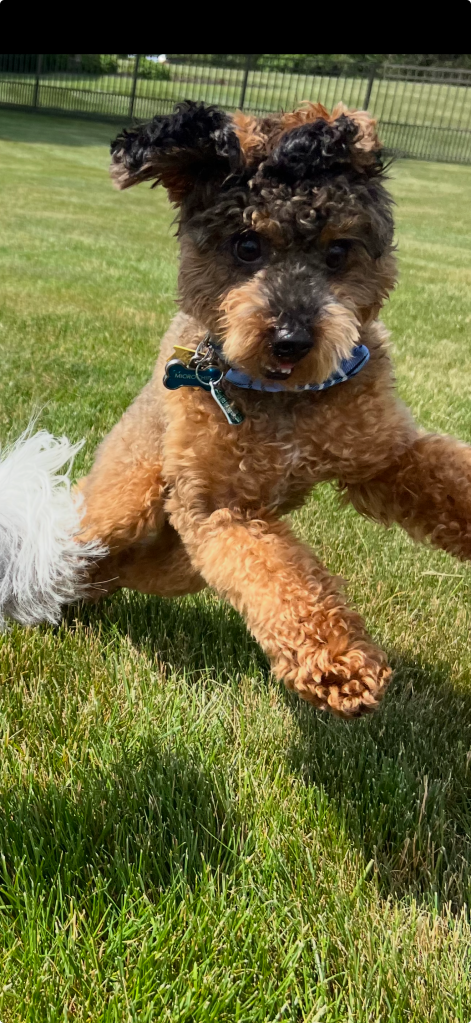

Spring is one of my favorite times of year. The flowers are blooming, the windows are open, and every dog in America is suddenly losing their mind.
If your dog has started licking their paws like they’re auditioning for a reality show, shaking their head every thirty seconds, or rubbing their face along the carpet like it owes them money, you are not imagining it. And you are not alone. Seasonal allergies in dogs are one of the most common reasons pet parents call us in the spring, and one of the most misunderstood conditions in veterinary medicine.
Here’s the thing most people don’t realize: allergies aren’t an allergy problem. They’re an inflammation problem. Your dog’s immune system has decided that pollen, grass, or dust is a threat it needs to fight off, and it’s sending inflammation to do the job. That inflammation shows up on the skin, in the ears, and on the paws, and it makes your dog miserable.
The good news is that once you know what you’re looking at, most seasonal allergy cases can be managed at home with a few small changes. Let me walk you through how to spot it and what to actually do about it.
Three Signs Your Dog Has Allergies
- Excessive licking, especially the paws
This is the number one sign I see in the exam room, and the one most pet parents dismiss as “he just does that.” If your dog is licking their paws until the fur between their toes turns rust-colored, that’s not a grooming habit, that’s itch. The paws are one of the first places environmental allergens land when a dog walks across a lawn, a sidewalk, or even your living room carpet. Pollen sticks to the fur, sits against the skin, and triggers an inflammatory response. The dog licks to soothe the itch. The licking adds moisture. The moisture breeds yeast. The yeast makes it itchier. It is a perfect, miserable loop.
You may also see what I call corn-cobbing, that frantic chewing where the dog gnaws at their paws, legs, or belly with their front teeth like they’re working their way through a cob of corn. Same root cause, same solution.
- Rolling, rubbing, and scratching on the carpet
If your dog is suddenly using the living room rug as a full-body scratching post, rolling on their back, dragging their face along the floor, rubbing their sides against the couch, they are trying to scratch an itch they can’t reach. This is almost always skin inflammation. Their coat is saying something is wrong down here, and they’re doing the only thing they know how to do about it.
Take a close look at the skin under the fur. You may see redness, tiny bumps, or a general pink hue where there shouldn’t be one. That’s your confirmation.
- Head shaking and ear scratching
Here’s the perspective shift I want every pet parent to make: your dog’s ears are skin. They are a flap of skin folded over on itself, with a warm, dark, moist canal underneath. When your dog is having a skin allergy reaction, the ears are almost always involved. We just don’t think of them that way because they’re not where we usually look.
If your dog is shaking their head, digging at their ears with a back paw, or tilting their head after they scratch, that is allergy skin inflammation that has moved into the ear. Left alone, it’s the fast track to a yeast or bacterial ear infection, and a much more expensive vet visit.
Four Things You Can Do at Home


- Wipe the paws
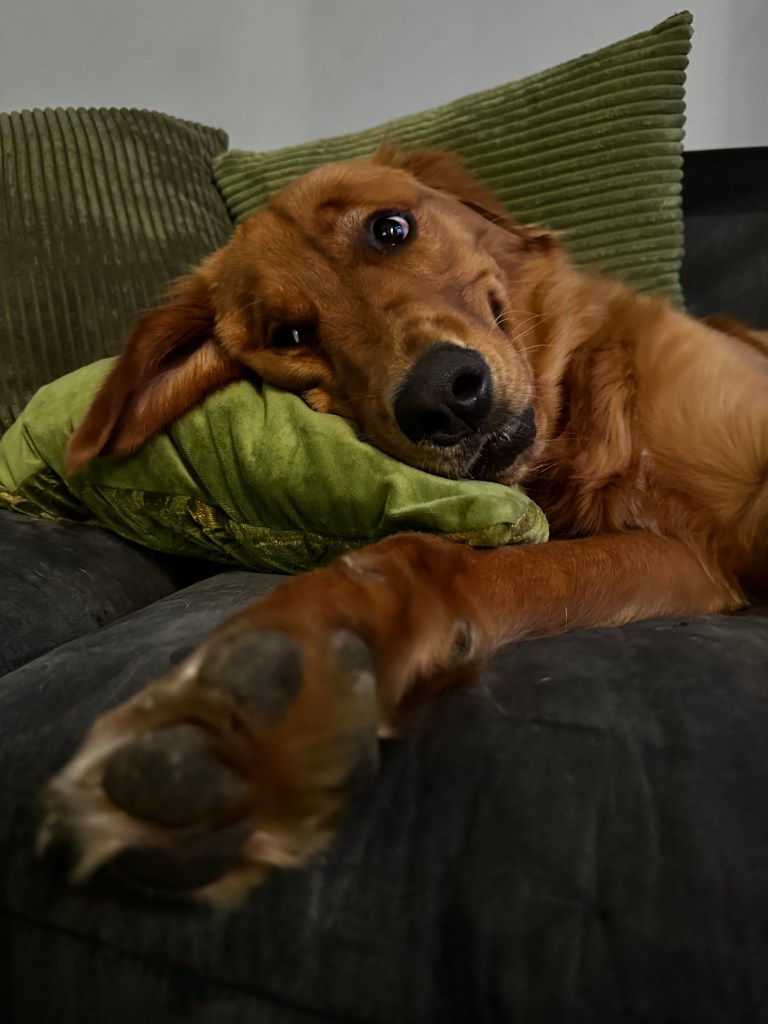
This is the single highest-impact thing you can do, and it costs almost nothing. Every time your dog comes inside, but especially after the last potty trip of the night, wipe their paws. You are physically removing the pollen so it doesn’t sit on their skin all night, giving their immune system eight straight hours to mount a reaction. If you’re a fully committed overachiever, wipe them every time they come in. If you’re like me and running a company and raising dogs and generally surviving the week, just do it at night before bed. A wet paper towel or an unscented pet-safe water wipe is all you need. Don’t overthink it.
- Support from the inside with omega-3 fatty acids and a targeted itch supplement
Remember what I said earlier: allergies are misguided inflammation. Omega-3 fatty acids help support a normal, healthy inflammatory response throughout the body, which means they help quiet the overreaction your dog’s immune system is making. I recommend Nutramax Welactin. It’s a high-concentration marine omega-3 supplement that delivers clinically relevant levels of EPA and DHA, and the quality is veterinarian-grade, which matters more than most pet parents realize for a supplement that’s meant to support the immune system.
For dogs having an active flare, I also like pairing Welactin with Dermaquin. It’s a soft chew that combines quercetin, a plant antioxidant that supports skin comfort and a healthy skin response, bromelain, an enzyme that supports a healthy inflammatory response, and additional omega-3s. Think of it as targeted daily support during peak pollen weeks, layered on top of the foundational omega-3. Both are in our vet-curated catalog here.
- Flush the ears with a drying agent and antifungal
Remember that the ears are skin, and the ear canal is warm, dark, and damp, which is the exact environment yeast and bacteria love. If you proactively flush your dog’s ears with a veterinary ear cleaner that contains a drying agent and an antifungal, you are doing two things at once: removing the allergens and debris that just got in there, and making the canal an environment where yeast can’t set up shop.
This is prevention, not treatment. If your dog already has a smelly, goopy, painful ear, that’s an infection, and that needs a vet visit. But a weekly ear flush during allergy season, on a dog whose ears look normal, can absolutely keep you from ending up in my exam room at 9 PM on a Sunday.
- A medicated bath with a skin-barrier shampoo
Same logic as wiping the paws, scaled up to the whole dog. On a heavy pollen day, or after a long hike, a bath with a gentle medicated shampoo physically washes the allergens off and helps restore the skin barrier that’s been inflamed all week. I recommend Douxo S3 Pyo Shampoo. It’s a veterinary dermatology line built around ophytrium, which helps rebuild the skin’s natural barrier, and it’s soap-free and fragrance-gentle enough to use once or twice a week during peak season.
The key here is barrier support. A dog with allergies has a skin barrier that’s already compromised. Regular pet store shampoo can make that worse. A barrier-supporting medicated bath actively supports your dog’s skin health during peak season.
The One Thing I Need You to Do Before Any of This
Before you chalk any of these symptoms up to seasonal allergies, I need you to make sure your dog is on a veterinarian-recommended flea and tick preventative, year-round.
Here’s why this matters, and why it’s the most overlooked thing in veterinary dermatology: flea allergy dermatitis looks almost identical to seasonal allergies. And here’s the crazy part, you may never see a flea. Dogs with flea allergy dermatitis are often reacting to a single bite that happened days ago. The flea is long gone. The itching is not.
Think of it like humans and poison ivy. The plant is long gone, but the inflammatory response rages on for a week or two. Flea allergy is the same. One bite, two weeks of itching.
If your dog isn’t on flea and tick prevention, please start. It’s cheap, it’s easy, and it’s the single fastest way to rule out the most common cause of mystery itching I see in this clinic. There’s no point trying to treat seasonal allergies if fleas are the real problem. Talk to your vet about the best option for your dog and your region.
How Bad Is Bad? The One-to-Ten Itch Scale
Here’s a simple way to evaluate your dog at home. On a scale of 1 to 10:
1 equals a little itchy, scratches occasionally, no real disruption
5 equals itchy enough that you notice it every day, some paw licking, the occasional head shake
10 equals your dog stops doing what they love to do in order to itch. They’ll stop in the middle of eating, pause a game of fetch, wake up from a nap to scratch
If your dog is at the high end of that scale, 7, 8, or above, this is not just seasonal allergies. This needs to be evaluated by your vet as soon as possible. There are prescription options, short courses of medication, and safe over-the-counter antihistamines your vet can recommend. Please don’t guess on doses. Some human antihistamines are dangerous for dogs, and the right one for your dog depends on their size, their health, and what else they’re on.
Allergies are manageable. Allergies are common. But a dog who is suffering at a 9 out of 10 does not need to keep suffering. That’s what we’re here for.

Dr. Elena Shockman, VMD is the founder of Paw & Pestle, a veterinarian-led platform for trusted pet supplements, prescriptions, and care. Every product on our platform is screened by a veterinarian before it’s listed.
 Paw & Pestle
Leave a comment