A Christmas Miracle
This puppy was part of a Christmas litter.
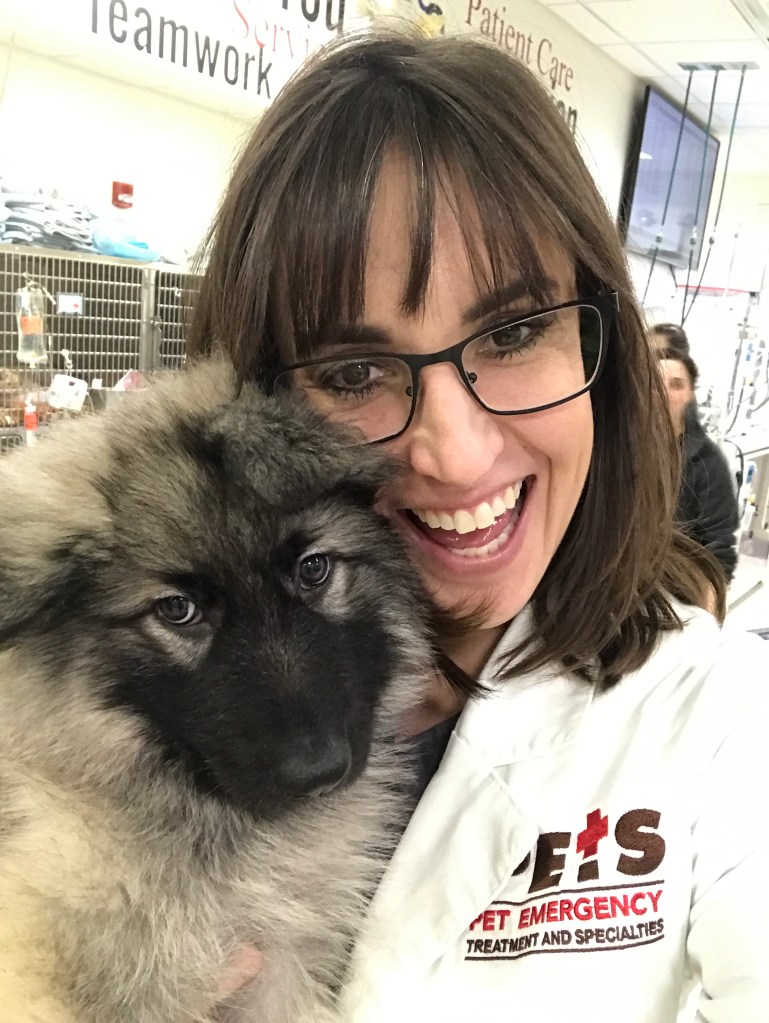
Instead of going home to the family who had chosen him, he came to the ER.
He was regurgitating, and after a full workup, I diagnosed him with megaesophagus—a condition that can be chronic, difficult to manage, and associated with serious long-term complications if it’s missed or left untreated. It’s also a condition that can be easy to overlook early on, especially in young puppies, where symptoms may seem mild or inconsistent at first.
This is where the story could have gone very differently.
The breeder made a brave, ethical, and deeply responsible decision that reflected her commitment to the well-being of the animals in her care. She chose not to send him home, understanding the potential implications of placing him in an unsuitable environment where his needs might not be met.
(She also didn’t choose euthanasia, recognizing the value of his life and opting instead to explore alternative solutions that could provide him with the love and support he truly deserved.)
She chose the puppy—over convenience, expectations, and pressure.
And that choice matters.
Because early recognition and early intervention can change outcomes. In conditions like megaesophagus, timing matters. Catching it early gives us more options, more room to monitor closely, and more opportunity to support the patient before secondary complications take hold.
There are many ways people help animals. And there are breeders who are doing thoughtful, responsible work—breeders who stay involved, who ask hard questions, and who put animal welfare first when things don’t go according to plan.
This breeder did exactly that.
She signed him over to my care. One of my nurses fell in love immediately and stepped up to take on the financial responsibility. And as a team, we decided to give him a real fighting chance—because good medicine is rarely a solo effort. It’s collaboration, communication, and shared responsibility.
We started a novel approach to treating his megaesophagus—early, intentional, and closely monitored. Care plans like this require consistency, follow-through, and a willingness to reassess as the patient grows and changes.
Instead of progressing, his condition improved.
Instead of declining, he outgrew it.
Five years later, he’s thriving.
He’s a blood donor.
He has saved many, many dogs.
A puppy whose future once felt uncertain became a dog who now helps save lives.
This story isn’t about perfection.
It’s about paying attention to early signs.
It’s about listening—to symptoms, to concerns, to each other.
It’s about choosing responsibility and partnership when it matters most.
And yes—he’s also a perfect angel.


With Love,
Dr. Elena Shockman

 Paw & Pestle
Leave a comment